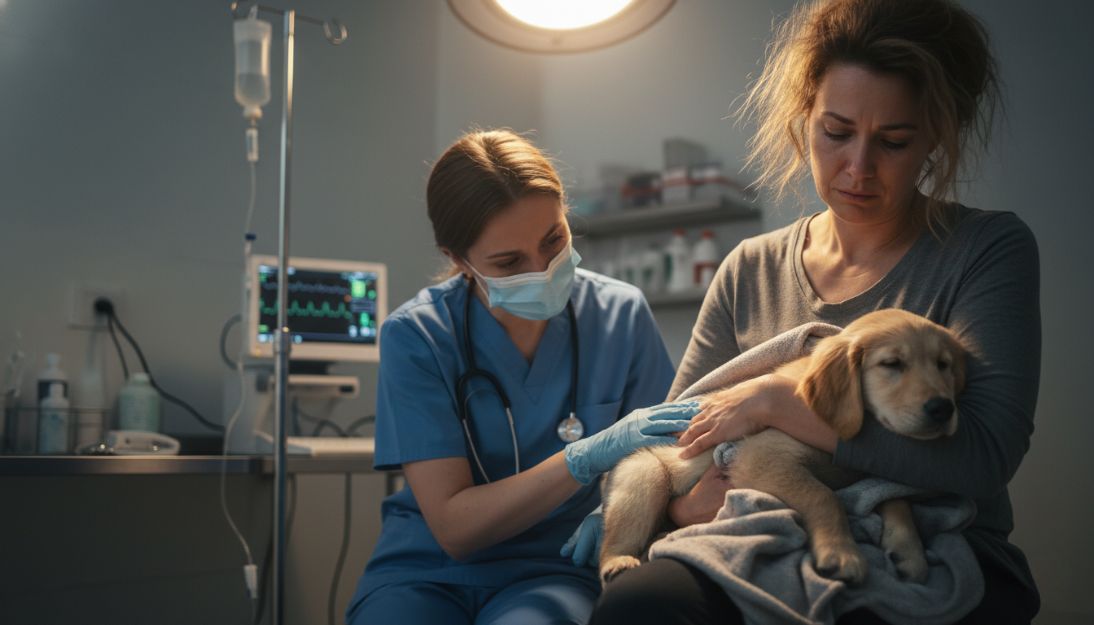
How Veterinarians Define an Emergency During Labor
Labor is considered an emergency when the normal progression of delivery stops or when the mother shows signs of systemic stress. These situations increase the risk of fetal oxygen deprivation, uterine injury, infection, and hemorrhage.
Emergency evaluation is required when labor no longer advances in a predictable or safe way.
Red Flags During Active Labor
The following findings warrant immediate veterinary care:
- Strong, regular contractions lasting more than 30 minutes without producing a puppy
- A pause of more than two hours between delivered puppies
- A puppy visibly lodged in the birth canal
- Green or dark vaginal discharge before the first puppy is born
- Heavy or continuous bleeding
- Sudden exhaustion, weakness, or collapse
- Signs of severe pain or distress not relieved by rest
These signs may indicate dystocia, uterine inertia, fetal distress, or obstruction.
Why Labor Can Deteriorate Quickly
Once labor becomes prolonged, uterine contractions weaken and fetal oxygen levels decline. As time passes, puppies may no longer be viable, and the mother’s risk of infection, uterine rupture, or shock increases.
Emergency intervention at the right moment can prevent cascading complications.
What Emergency Evaluation Focuses On
When a dog presents in labor distress, the veterinary team assesses:
- Maternal cardiovascular stability
- Fetal heart rates and positioning
- Whether medical support is appropriate or if surgical delivery is necessary
Emergency cesarean section may be recommended when vaginal delivery is no longer safe.
Situations That Increase Emergency Risk
Certain factors raise the likelihood of labor complications, including:
- Prior history of difficult delivery
- Brachycephalic conformation (Bulldogs, Pugs, Boston Terriers)
- Single-puppy or very large litters
- Prolonged early labor without progression
In these cases, earlier evaluation is often safer than waiting.
Avoiding Harmful Delays
Attempting manual assistance, administering medications without veterinary guidance, or waiting for labor to “restart” can worsen outcomes. When progression stops, professional assessment is essential.Labor emergencies are defined less by panic and more by loss of progression. Recognizing that moment is key. At URvet Care, our emergency and surgical teams are experienced in evaluating canine labor in real time and intervening when delivery is no longer safe to continue.