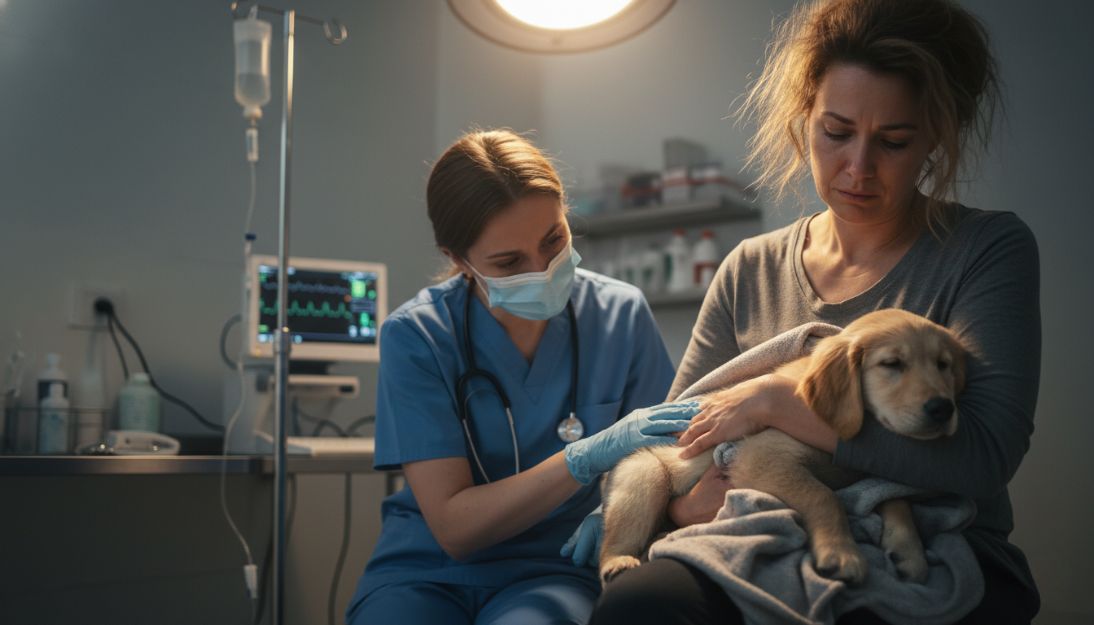
For NYC pet parents, understanding pyometra can make the difference between a successful recovery and a medical crisis.
What Is Pyometra?
Pyometra is a severe infection of the uterus caused by hormonal changes following a heat cycle. The uterus fills with pus, bacteria multiply rapidly, and toxins enter the bloodstream. This can lead to sepsis, organ failure, and death if treatment is delayed.
Pyometra typically occurs in unspayed dogs over 6 years old, usually within weeks to months after a heat cycle. It occasionally affects unspayed cats as well.
Two Types of Pyometra:
Open pyometra occurs when the cervix remains open, allowing pus to drain. Vaginal discharge may be visible, making diagnosis easier.
Closed pyometra occurs when the cervix is sealed shut, trapping infection inside. This form is more dangerous because there’s no visible discharge, and internal pressure builds rapidly.
Common Symptoms of Pyometra
Symptoms can appear subtle at first and then worsen rapidly. Watch for lethargy or sudden weakness, loss of appetite, increased thirst and urination, vomiting or diarrhea, swollen or painful abdomen, vaginal discharge that may be bloody or pus-like, and fever or collapse in severe cases.
In closed pyometra, there may be no visible discharge, which is why many cases are diagnosed late. The absence of discharge does not mean the absence of infection.
Why Pyometra Is a Medical Emergency
Pyometra cannot wait until morning or be treated with medication alone. As the infection progresses, the uterus can rupture, bacteria and toxins flood the bloodstream, kidneys and liver begin to fail, and shock develops quickly.
Without treatment, pyometra is often fatal within days. Emergency surgery is the standard and safest treatment.
How Pyometra Is Treated
The primary treatment for pyometra is an emergency spay surgery, also known as an ovariohysterectomy. This involves removing the infected uterus and ovaries.
Before surgery, pets often require IV fluids to stabilize blood pressure and hydration, antibiotics to control infection, blood tests to assess organ function and surgical risk, and imaging such as ultrasound or X-rays to confirm diagnosis.
Because many pets with pyometra are already systemically ill, this surgery is more complex and risky than a routine spay. It should be performed in a facility equipped for emergency and critical care with experienced surgical staff.
Why Immediate Surgery Improves Survival
Timing matters. Pets treated early have significantly better outcomes than those treated after complications develop. Delays increase the risk of uterine rupture and peritonitis, septic shock and organ failure, longer hospital stays and recovery times, and higher surgical risk due to advanced illness.
In NYC, where traffic and clinic availability can delay care, seeking immediate emergency veterinary treatment is critical if pyometra is suspected.
Can Pyometra Be Prevented?
Yes. Pyometra is entirely preventable through spaying. Elective spaying eliminates the uterus and ovaries, removing the risk of this infection altogether.
For pet parents who delay spaying, regular veterinary checkups and close monitoring after heat cycles are essential, but they do not eliminate risk. The condition can develop even in dogs with no prior health issues.
When to Seek Emergency Care
If your dog or cat is unspayed and shows any symptoms listed above, especially after a recent heat cycle, this is an emergency. Do not wait to see if symptoms improve.
Seek a veterinary emergency hospital with immediate surgery capabilities, critical care monitoring, and experience in emergency spay procedures. In NYC, URvet Care provides 24/7 emergency surgical services for pyometra cases.
Recovery After Emergency Surgery
Most pets recover well after pyometra surgery when treated promptly. Recovery typically involves hospitalization for 24 to 48 hours post-surgery, IV fluids and antibiotics during recovery, pain management, monitoring kidney and liver function, and activity restriction for 10 to 14 days at home.
Pets treated early, before severe systemic illness develops, generally have excellent long-term outcomes with no recurring issues once the uterus is removed.
Suspect your unspayed pet has pyometra? Call URvet Care immediately for emergency evaluation and surgery.
URvet Care provides 24/7 emergency surgical services for pyometra cases with experienced emergency surgeons, advanced pre-surgical stabilization and monitoring, comprehensive post-operative care, and immediate diagnostic capabilities including ultrasound and bloodwork.