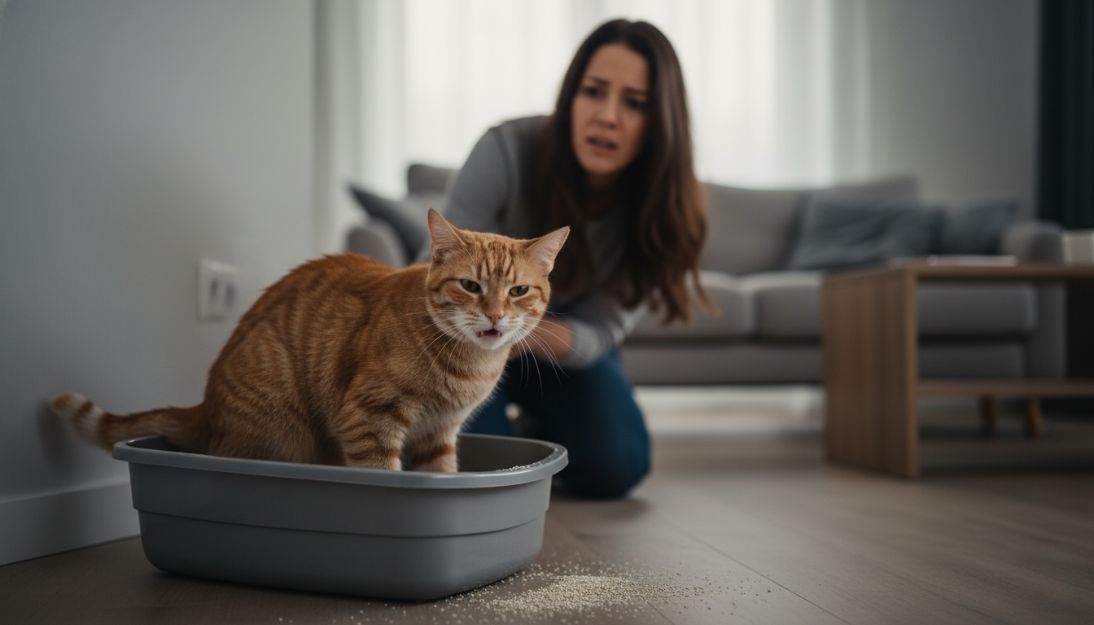
What’s Actually Happening Inside Your Pet
When urine can’t leave the body, waste products that should be excreted, like potassium and creatinine, build up in the bloodstream. The bladder stretches beyond capacity. The kidneys stop functioning properly. The heart rhythm becomes unstable.
A urinary obstruction occurs when something physically blocks the urethra, the narrow tube that carries urine from the bladder. In male cats, this tube is extremely narrow, which is why they’re at highest risk. Male dogs face similar dangers, though less frequently.
The blockage can be caused by bladder stones, inflammatory debris or crystals, urethral swelling or spasms, mucus plugs in cats with FLUTD, or tumors and scar tissue.
The Dangerous Timeline
0 to 12 hours: Discomfort begins. Frequent attempts to urinate with little or no output. The bladder is filling but can’t empty.
12 to 24 hours: Pain intensifies. The bladder becomes rock-hard. Toxins begin accumulating. Your pet may vomit, hide, or become lethargic.
24 to 48 hours: Life-threatening complications develop. Potassium levels spike, affecting heart rhythm. Kidney function declines. Cardiac arrest or uremic crisis can occur.
This is why waiting until morning is never safe.
What You’ll See at Home
Signs often start subtle and escalate quickly:
- Repeated straining with little or no urine
- Crying or vocalizing during attempts to urinate
- Blood-tinged urine or just a few drops
- Excessive licking of the genital area
- Tight, distended abdomen
- Vomiting or refusing food
- Hiding or sudden aggression when touched
- Lethargy or weakness
Important for cat owners: One of the most dangerous misconceptions is assuming they’re constipated. Cats crouch similarly for both. If you’re unsure, assume it’s urinary and seek emergency care.
Emergency Catheterization: First Line of Treatment
When you arrive at the emergency hospital, the priority is relieving the obstruction quickly. Your pet will be sedated, and a thin catheter is carefully threaded through the urethra into the bladder. Urine drains immediately, releasing pressure.
The catheter often stays in place for 24 to 48 hours while your pet receives IV fluids to flush the kidneys, correct electrolyte imbalances, and medications to reduce inflammation and manage pain.
For many pets, especially those with crystal or inflammation-related blockages, catheterization successfully resolves the problem.
When Surgery Becomes Necessary
Surgery may be required if imaging reveals bladder stones causing the blockage, the obstruction can’t be cleared with a catheter, or your pet has recurrent blockages.
This procedure, called a cystotomy, involves surgically opening the bladder to remove stones or obstructive material. The bladder is flushed clean and examined. Stones are analyzed to determine the best prevention plan.
In male cats with repeated obstructions, a procedure called perineal urethrostomy may be recommended to permanently widen the urethra.
Why URvet Care for Urinary Emergencies
- 24/7 emergency care for urinary obstructions
- Immediate catheterization and stabilization
- Advanced diagnostics and surgical capabilities
- Experienced teams trained in urinary emergencies
- Post-discharge follow-up and prevention guidance
Your pet is straining to urinate? Call URvet Care immediately. Don’t wait until morning.